Fortlandia at Lady Bird Johnson Wildflower Center: The Ultimate Austin Parent Insider's Guide for 2025-26
Right now, while most of Austin's outdoor activities are battling holiday crowds and unpredictable weather, Fortlandia is in its sweet spot—active, less congested than peak season, and offering perfect conditions for a memorable family outing. If you haven't experienced this locally-designed, artist-created wonder yet this season, here's everything you need to know to make the most of your visit.
Lady Bird Johnson Wildflower Center
$For the most relaxed experience, aim for a weekday morning visit between mid-December and mid-January—cool temps, lighter crowds, and fully “broken in” forts.
What Exactly Is Fortlandia?
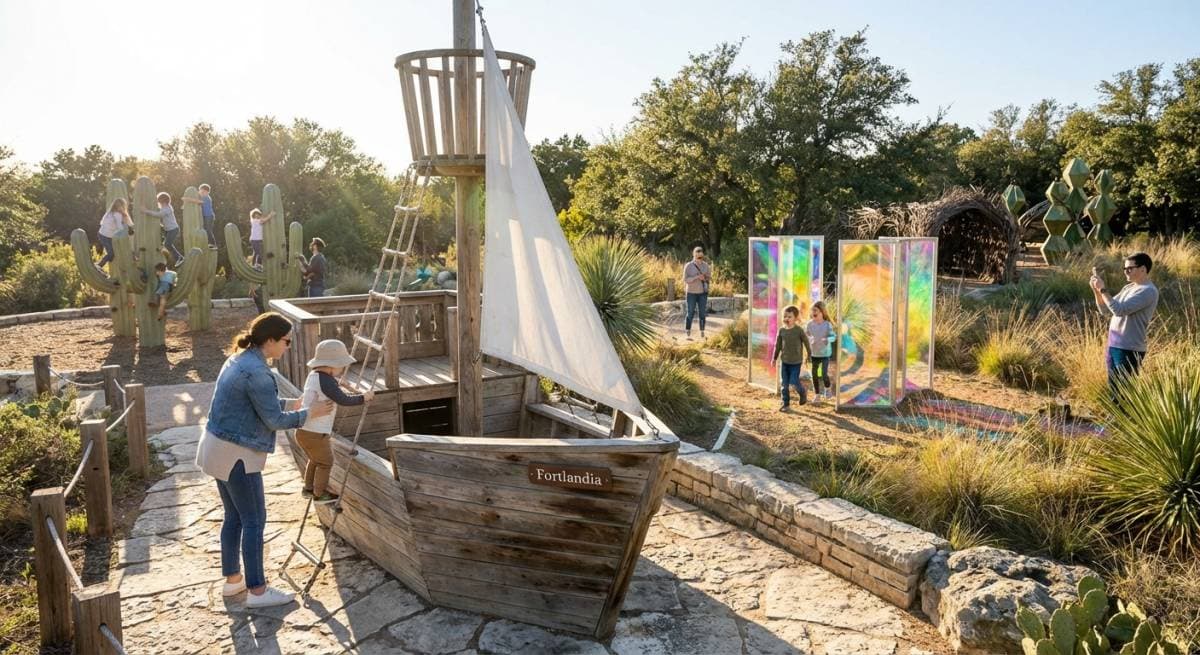
Fortlandia is Austin's most imaginative answer to a question parents rarely ask but desperately need answered: "Where can my kids climb all over art installations without me having a heart attack about damage?" This annual exhibition transforms the Lady Bird Johnson Wildflower Center into an interactive playground where eight custom-built forts—each designed by local architects and artists—invite children (and uninhibited adults) to touch, climb, jump, and explore without restriction. It’s all part of UT Austin’s broader mission to connect people of all ages to the environment through interactive exhibits.
What makes this different from typical playgrounds is the artistic intention. Each fort tells a story rooted in nature and Texas landscape. "Roots Rambler," designed by landscape architect Suzanne Wyss, features intricately woven ropes under a wooden ramp inspired by the complex root systems hidden beneath prairie grass. "Cactlandia" translates the iconic Texas barrel cactus into three climbable structures of varying heights. There's also a sailboat complete with a crow's nest and captain's wheel—the fort that consistently makes children's eyes light up the moment they spot it. Local coverage from outlets like The Daily Texan and CBS Austin has highlighted how these designs blend play with education and nature.
The Wildflower Center intentionally created this eight-year-old program (with over 64 different designers having contributed) to address something Executive Director Lee Clippard identifies as crucial:
"A lot of us, when we were kids, we had access to forts or woods or things like that. That access is becoming a little less for people.
Fortlandia brings that childhood magic back.
This Season's Timeline and Crowd Strategy
Season runs: October 4, 2025 through February 2, 2026
While Fortlandia typically runs rain or shine, severe storms or icy conditions can trigger last-minute closures. Double-check the Wildflower Center site or socials before heading out on questionable-weather days.
You’ll find the official dates and event description on both the Wildflower Center’s Fortlandia page and the Visit Austin event listing, which are helpful if you’re coordinating with out-of-town visitors or planning a bigger Austin weekend.
Here's the insider timing secret: mid-December through early January (excluding the holiday closures) is often when crowds thin out significantly. While 125,000 people visit during the entire season, they're distributed unevenly. After the initial October rush and just before the holiday break, you'll find manageable crowds. However, the week between Christmas and New Year's sees families home from school, so expect moderate crowds December 26-31 (note: the center is closed December 24, 25, and 31).
Pro timing strategy: Weekday visits between 9 AM and noon offer the best experience. The center opens early, and most families with school-age children visit afternoons and weekends. Additionally, the mild Austin weather in January and early February means you avoid both the blistering heat and any potential weather complications.
Weekdays from 9 AM–noon are the sweet spot: cooler temps, easier parking, and fewer school groups and weekend crowds competing for the most popular forts.
The one closure date to watch: November 27 (Thanksgiving).
Holiday closures for the 2025–26 Fortlandia season: the Wildflower Center is closed November 27 (Thanksgiving), December 24, December 25, and December 31.
Your Insider Parent Playbook
Duration Planning: Don't underestimate your visit time. Many parents think they'll spend 45 minutes at Fortlandia and move on. Reality: families typically spend 2-3 hours exploring the eight main forts plus the build-your-own fort area, photographing, and (this matters) just letting kids decompress and play without agenda. The Luci and Ian Family Garden area where Fortlandia is located also includes a waterfall, cave, and digging pit—all part of your admission.
Block off a full half-day and treat Fortlandia as your main activity—kids engage more deeply when they don’t feel rushed from fort to fort.
The Build-Your-Own Fort Area: This isn't a minor feature. While the eight architect-designed forts are the headliners, the free-build area with loose materials (branches, logs, pallets) engages kids for surprisingly long periods. This is where you get the best "playing in nature" moments without crowds, and it taps directly into the kind of unstructured outdoor play the American Academy of Pediatrics has linked to healthy child development.
The loose-parts, build-your-own fort zone often holds kids’ attention longer than any single designed fort—plan to linger here if your child loves constructing and tinkering.
The Hidden Treasure Fort: Fortlandia traditionally includes one off-site fort, often hidden somewhere on or near the hike and bike trail at Lady Bird Lake. Finding it becomes an expedition unto itself. Ask staff where it is when you arrive—it's worth the short adventure. You can pair the search with a family-friendly walk on the Lady Bird Lake Hike and Bike Trail for a bigger outing.
Voting and Engagement: Each fort has a QR code in front where visitors vote for their favorite. Make this a family moment—discuss which fort's design is most clever, which is scariest to climb, which tells the best nature story. At season's end, the "People's Choice Award" winner is announced. Kids remember voting for something; it creates ownership.
For another immersive, joy-first Austin experience that invites adults to play as much as kids, you might also like The Eureka Room Austin: A Local's Insider Guide to the City's Most Joyfully Weird Immersive Experience.
Age-Specific Experience Optimization
Ages 2-4: Fortlandia isn't ideal for toddlers, though the youngest occasionally love exploring the simpler structures. The sail fort with its low platforms and the oversized cacti offer climbable heights appropriate for this age. The digging pit in the Family Garden becomes the real star for this age group. Plan 45 minutes max for actual fort engagement, then transition to the garden.
Ages 5-8: This is Fortlandia's sweet spot. Most forts are designed with this age group's developmental needs in mind—climbs require strategy but feel achievable, heights are thrilling but safe. These kids will spend meaningful time on each fort, attempting different routes, developing climbing confidence. Budget full 2-3 hour engagement. If you want a second opinion on age fit and logistics, Austin With Kids’ Fortlandia guide aligns closely with this assessment.
Ages 9-13: Preteen visitors often surprise parents by spending even longer than younger siblings. The forts become challenges to "solve"—which route is fastest, which is most difficult, which makes the best video. The artistic design elements start registering. Consider bringing a notebook for them to sketch favorite forts.
Teenagers and Adults: The Wildflower Center has explicitly stated they designed these forts for adults to play on too. Don't be the parent standing on the sidelines—climb, attempt challenges, make your kid see you as playful. It transforms the experience from "kid activity" to "family adventure." The Children & Nature Network has excellent research on how shared outdoor play strengthens family connection, which is exactly what Fortlandia leans into.
Practical Logistics That Matter
Admission Costs and Value:
- $15 adults
- $12 seniors
- $9 children ages 3-17
- Members: free
- UT students, faculty, staff: free with ID
You can always confirm current prices, hours, and any special discounts on the Wildflower Center visitor information page.
The Membership Math: If you visit twice plus the rest of the Wildflower Center, annual membership pays for itself. If you have UT connection in your household, leverage it. Membership also plugs you into the American Horticultural Society’s Reciprocal Admissions Program, which includes places like Zilker Botanical Garden and gardens nationwide.
Parking: The Wildflower Center has a parking lot (free), plus street parking and back-in angle parking on La Crosse Avenue (also free). Arrive early on weekend mornings and you'll have easy lot access. Afternoon visits might require street parking, which is only slightly inconvenient.
On perfect-weather weekends and special event days, the main lot can fill and you may end up on La Crosse Avenue. Expect a 5–10 minute walk with kids from the furthest spots and build that into your timing.
Location: 4801 La Crosse Ave., Austin, TX 78739. The center has clear signage directing you to Fortlandia within the Luci and Ian Family Garden—you cannot get lost. If you’re building out a full day in the area, Visit Austin’s family-friendly things to do outdoors page is a useful planning tool.
What to Pack:
- Water bottles (refillable at fountains throughout)
- Sunscreen even in winter—Austin sun reflects off light-colored structures
- A change of clothes for kids or at least extra socks (muddy areas around digging pit)
- Closed-toe shoes required (climbing prerequisite)
- Light layers—65°F can feel cool in shade but warm in sun
- Phone fully charged for photos and QR code voting
- Small backpack for hands-free navigation
Restroom Situation: Facilities are available but require a short walk from the fort area. Visit before entering Fortlandia to avoid breaking momentum.
Photography and Memory-Making Strategy
The forts are exceptionally photogenic, which means two things: (1) everyone is photographing them, creating inevitable background crowds in shots, and (2) golden hour photography (sunrise to 2 hours after, sunset 2 hours before) produces magazine-quality images.
Professional-level photos require weekend morning visits between 8:30-10:30 AM when light is optimized and crowds haven't peaked. If photography is your goal, go mid-week. For more general outdoor shooting tips, the National Park Service’s guide to photographing in parks has smart, easy-to-apply advice on light and composition.
For family photos, use the less-photographed structures like the digging pit area and the build-your-own fort section. The main eight forts will have crowds, so plan candid action shots rather than posed "in front of" images.
Video tip: Capture your kids playing rather than posing. The climbing, problem-solving, and joy moment are what you'll treasure in 5 years.
Safety Considerations and Weather Preparation
Climbing Safety: Forts are professionally engineered by architects with safety standards, not backyard DIY. However, supervision remains essential. Children should wear closed-toe shoes (climbing safety standard), and parents should assess their child's comfort level with heights. Some kids are thrilled by 8-foot climbs; others need smaller challenges. There's no shame in choosing forts that match your child's development. The broader movement toward nature play spaces and adventure playgrounds echoes Fortlandia’s design ethos: managed risk, creativity, and sensory engagement.
Skip sandals and flip-flops—kids in non–closed-toe shoes may struggle for grip on ramps and ropes, and could be restricted from climbing certain structures.
Weather Reality: December in Austin means 60-70°F typically, which is perfect. January can drop to 50-60°F. February starts warming back up to 65-75°F. None of this weather prevents visits; you'll simply need layers. Rain is rare this season, but if forecast rain threatens, call ahead—the center sometimes closes in heavy weather, though most light rain doesn't interfere.
Crowd Management: While Fortlandia isn't dangerously crowded even at peak, the forts do fill up during popular times. Teaching your child to take turns, wait for a climbing route to clear, and navigate shared spaces develops essential skills. This is a feature, not a bug, and aligns with what the Children & Nature Network describes as social-emotional benefits of shared outdoor play.
Value Analysis: Single Visit vs. Membership vs. Season Pass Strategy
Single Visit Value: $15 adult + $9 child + potential concessions = ~$30-35 for a 2-3 hour outing. Compare this to other Austin family activities (Zilker Botanical Garden admission + admission elsewhere, movie tickets with concessions, entertainment venues). Fortlandia offers high-value, unique experience.
If You're a Wildflower Center Member Already: Fortlandia is free, making this