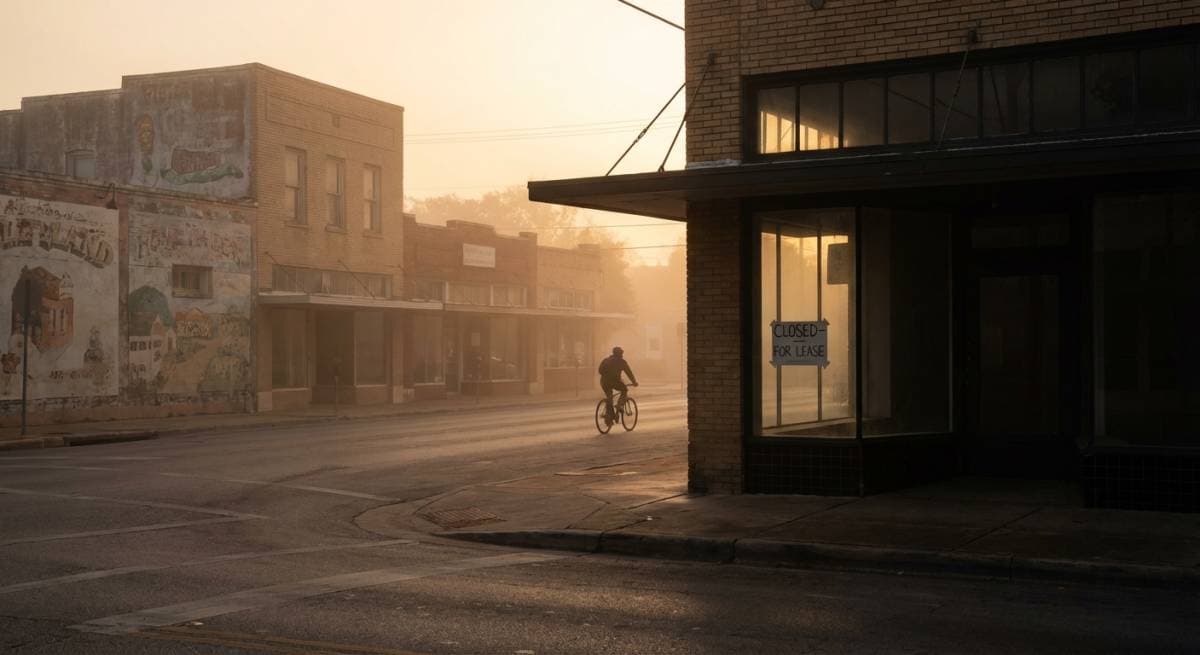
Austin spent 2025 celebrating new openings, expansions, and infrastructure wins—but beneath the excitement was a quieter, more emotional story: the beloved local businesses that didn’t make it to 2026. These closures reveal where Austin is heading, what pressures continue reshaping the city, and what longtime residents fear losing, echoing the broader small business struggle documented by outlets like KUT and the Austin American-Statesman.
This list reflects high-profile closures reported through the end of 2025. Always double-check a spot’s status before you go—Austin’s small business landscape is changing fast.
WHAT AUSTIN LOST IN 2025
Every business listed in this section has closed or significantly changed as of late 2025, with many spaces already under redevelopment review.
The year brought the end of several community touchstones, many of which were documented in local 2025 closure roundups such as KUT’s year‑end business list:
- Thom's Market (all locations closed; rebranded as Fin’s First Market)
- Trudy’s (final Burnet location shut down after 40+ years)
- Hana World Market (closed after 13 years)
- Jim-Jim's Water-Ice (31-year staple ended in October)
- Black Star Co-op (worker-owned brewpub closed after 14 years)
- The Skylark Lounge (iconic live‑music spot ended its run)
- East Side King (closed after 15+ years)
- Koriente (20‑year downtown favorite ended in November)
- Limbo/Triple Z Threadz (closing after 20 years)
Trudy’s (Burnet Road – Closed)
$$The Skylark Lounge (Closed)
$$Black Star Co-op (Closed)
$$If you loved any of these spots, follow their former owners on social media—several are already teasing pop-ups, collaborations, or new concepts for 2026.
Each closure was driven by a mix of rising rents, supply‑chain pressures, tariff costs, labor competition, and the citywide shift toward high‑density redevelopment—pressures that local reporters at Community Impact and the Austin American-Statesman have tracked across corridors like Burnet Road and South Lamar.
Spaces left behind by legacy bars and restaurants on Burnet, South Lamar, and East 6th rarely stay vacant for long—once a redevelopment sign goes up, expect rapid construction and reduced parking.
WHAT THESE CLOSURES REVEAL
- Long‑running, culturally rooted businesses struggle most with rising commercial rents, a theme explored deeply by the Austin Chronicle’s coverage of Austin’s changing music and food districts.
- Independent operators face shrinking margins while national retailers expand, a dynamic mirrored in Community Impact’s reporting on new luxury stores alongside local restaurant closures.
- Legacy businesses increasingly relocate or rebrand instead of permanently closing.
- Austin’s nostalgia economy—neighborhood markets, old‑school bars, family eateries—is thinning fastest, a loss that sits in tension with the city’s global dining renaissance and influx of new concepts.
Watch for “soft closures” where a familiar name reappears as a new concept, food truck, or pop-up. In 2025, rebrands and relocations became almost as common as outright shutdowns.
INSIDER INTELLIGENCE
- Expect additional legacy closures in early 2026 as leases renew along Burnet, South Lamar, and East 6th—pressure points that mirror what we’ve reported in Inside Downtown Austin’s Small Business Crisis and the New Relief Programs Locals Need to Know About.
- Several closed businesses are pursuing relocation deals in Pflugerville and Buda, where commercial rates are lower, a trend similar to what KUT’s small business coverage has surfaced in 2025.
- Former owners of two shuttered restaurants are reportedly involved in a new food‑hall project planned for North Austin (permit filings expected Q1).
- Anchoring businesses like Trudy’s and Skylark will likely be replaced by mixed‑use redevelopment; early zoning inquiries support this and echo the redevelopment pressures we unpack in Austin’s New RPP Rules: The Insider Guide Residents Are Missing in 2025.
If you want to support remaining legacy spots, prioritize weekday visits and off-peak hours—many report that slow midweek traffic hurts as much as rising rents.
North-suburb relocations (to places like Pflugerville and Buda) often mean more parking, lower prices, and larger spaces—but at the cost of transit access for car-free Austinites.
RELATED AUSTIN COVERAGE
For readers looking to connect these losses to what’s opening or evolving elsewhere in the city, explore more of our recent reporting:
- Inside Downtown Austin’s Small Business Crisis and the New Relief Programs Locals Need to Know About
- Inside Austin’s Hidden Holiday Pop‑Ups: The Secret December Experiences Locals Are Just Now Discovering
- Austin’s New RPP Rules: The Insider Guide Residents Are Missing in 2025
- Inside Austin’s Global Dining Renaissance: The Insider Guide to the City’s Ethiopian, Georgian, and Trinidadian Breakthroughs
Austin is still gaining—but what it’s losing says just as much about the kind of city it’s becoming. 2025’s closures show a community in transition, with deep cultural costs that will shape conversations in 2026 and beyond, alongside the celebrations detailed in our coverage of hidden seasonal pop‑ups and citywide holiday experiences.
Related Austin Data
Inside Austin’s 2025 Business Closures: What the City Lost—and What It Means for 2026
Choose how to share