Mission Dolores State Historic Site isn’t just another Texas historic stop—it’s one of the earliest Spanish colonial settlements in the region and a rare opportunity to walk the same ground where Indigenous Ais people and Spanish missionaries shaped early Texas. Located in San Augustine, this site offers a deep dive into 18th‑century frontier life through archaeology, interpretive exhibits, and ongoing research, much of which is documented through the Texas Historical Commission’s Mission Dolores State Historic Site.
Mission Dolores State Historic Site
$While not Austin‑based, Mission Dolores is a powerful addition to any Texas heritage exploration, especially as the site hosts its Trail of Lights Extravaganza on December 6—a perfect excuse to visit and pair with classic Austin holiday traditions like the Trail of Lights at Zilker Park.
If you’re driving in from Austin, make a weekend of it by pairing Mission Dolores with other East Texas stops—San Augustine’s historic downtown and nearby lakes make the trip feel like a full getaway rather than a day dash.
INSIDE THE HISTORY
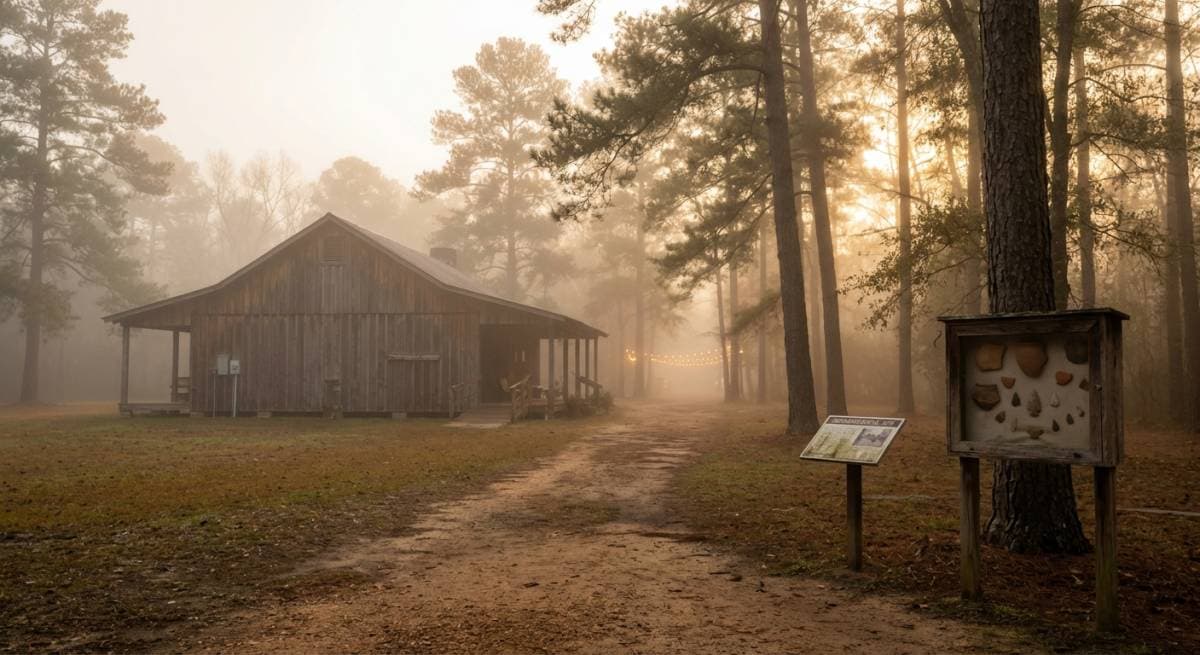
Mission Dolores was first established in 1717, briefly abandoned, and then re‑established in 1721 before permanently closing in 1773, a timeline explored in more depth in the Texas Historical Commission’s Mission Dolores history overview. Though no above‑ground mission structures remain, archaeologists have uncovered artifacts such as ox bones, knife blades, gunflints, and horse trappings that reveal daily mission life and the relationships between missionaries and the Ais people; you can dig into the excavation details and artifact interpretations via Texas Beyond History’s Mission Dolores project.
This is an archaeology‑forward site: you won’t see towering stone ruins, but you will see how artifacts and research are used to reconstruct daily life for both the Ais people and Spanish missionaries.
Mission Dolores also sits along the historic route of El Camino Real de los Tejas, part of a broader network of Spanish colonial roads connecting Louisiana and Mexico and now commemorated as the El Camino Real de los Tejas National Historic Trail.
THE EXPERIENCE TODAY
Visitors start at the museum, featuring artifacts and interpretive displays, then follow an outdoor walking trail that traces the historic mission footprint; current exhibit highlights and interpretive themes are outlined on the official Mission Dolores museum page. The 36‑acre grounds include a picnic area, group pavilions, and an adjacent campground, making it easy to pair your visit with other East Texas adventures featured on Visit San Augustine’s local attractions guide. Recommended visit time is one to two hours, and you can double‑check any seasonal programming or closures through the Texas Historical Commission’s “Plan Your Visit” information.
Plan on 1–2 hours on site: start inside with the museum and short film (if available), then walk the mission footprint trail last so you can visualize the layout with fresh context.
Always confirm hours and special event dates before making the drive—smaller state historic sites sometimes adjust schedules for weather, staffing, or programs.
ESSENTIAL VISITOR INTEL
• Address: 701 South Broadway St., San Augustine, TX 75972
• Hours: Tue–Sat, 8am–5pm (confirm current hours via the official NPS listing for Mission Dolores State Historic Site)
• Admission: Adults $5; Seniors/Veterans/Teachers/First Responders $3; Kids 6–17 $2; 5 and under free; Family pass from $8
• Contact: 936‑275‑3815
• Designations: National Register of Historic Places, State Antiquities Landmark, and part of the El Camino Real de los Tejas National Historic Trail, which links numerous Spanish colonial sites across Texas and Louisiana
Admission is budget‑friendly compared to many larger attractions, especially if you’re bringing kids or using the family pass—making it an easy add‑on to a broader East Texas road trip.
INSIDER INTELLIGENCE
• The museum’s archaeological displays rotate as new excavations continue—returning visitors often see newly cataloged discoveries, many of which are researched in partnership with regional institutions like Stephen F. Austin State University’s Center for Regional Heritage Research.
Because collections and interpretations are actively evolving, repeat visits can feel different each time—great if you like seeing “behind the scenes” of how history is updated with new evidence.
• The walking trail connects directly to the Mission RV Park, making this a convenient heritage stop for road‑trippers exploring East Texas and following routes mapped by Texas Time Travel’s Mission Dolores profile.
Staying at Mission RV Park or nearby campgrounds? You can walk straight onto the mission grounds without dealing with extra parking or driving between sites.
• Saturday mornings feature free Kid’s Craft Drop‑In activities, making the site particularly family‑friendly and a relaxed counterpoint to bigger city outings like Austin’s hidden nature‑forward park escapes.
If you’re visiting with kids, aim for a Saturday morning so they can burn energy with craft activities before you dive into the museum and trail.
• Historic Foodways programs offer rare demonstrations of 18th‑century cooking techniques, adding a sensory layer to your understanding of mission life that complements the broader historical context shared by the City of San Augustine’s Mission Dolores overview.
Foodways demos aren’t daily—keep an eye on the site’s event calendar or call ahead if you want to plan your visit around live cooking demonstrations.
INTERNAL LINKS TO RELATED GUIDES
If you're exploring more Texas history or seasonal outings, you may also enjoy:
• Inside Austin’s Trail of Lights at 60: https://austintexasthings.com/article/inside-austins-trail-of-lights-at-60-the-insider-guide-to-the-citys-oldest-holiday-tradition
• Inside Zilker Holiday Tree 2025: https://austintexasthings.com/article/inside-zilker-holiday-tree-2025-austins-last-big-family-tradition-of-the-season
• Inside Austin’s Hidden Parks of 2025: https://austintexasthings.com/article/inside-austins-hidden-parks-of-2025-the-insider-guide-to-the-citys-secret-nature-escapes
Related Austin Data
Inside Mission Dolores State Historic Site: The Insider Guide to Texas’s Earliest Spanish Frontier Settlement
Choose how to share