If you’ve already toured the Texas State Capitol and snapped golden‑hour photos at Mount Bonnell, but you still feel like you haven’t touched Austin’s earliest heartbeat, this is where you go next.
Neill‑Cochran House Museum
🗺️100+ areas with interactive maps and local data
Neill‑Cochran House Museum
$The Neill‑Cochran House Museum, built in 1856, isn’t just one of Austin’s oldest surviving homes — it’s one of the only places where you can stand inside a pre‑Civil War residence and walk through the city’s only intact slave quarters open to the public. That combination makes it one of the most historically significant — and quietly powerful — sites in Central Texas.
This is one of the few accessible structures in Austin that predates both the University of Texas and most of the surrounding city grid.
Here’s what most visitors don’t know before they step through the Greek Revival columns at 2310 San Gabriel Street.
Why the Neill‑Cochran House Still Matters in 2026
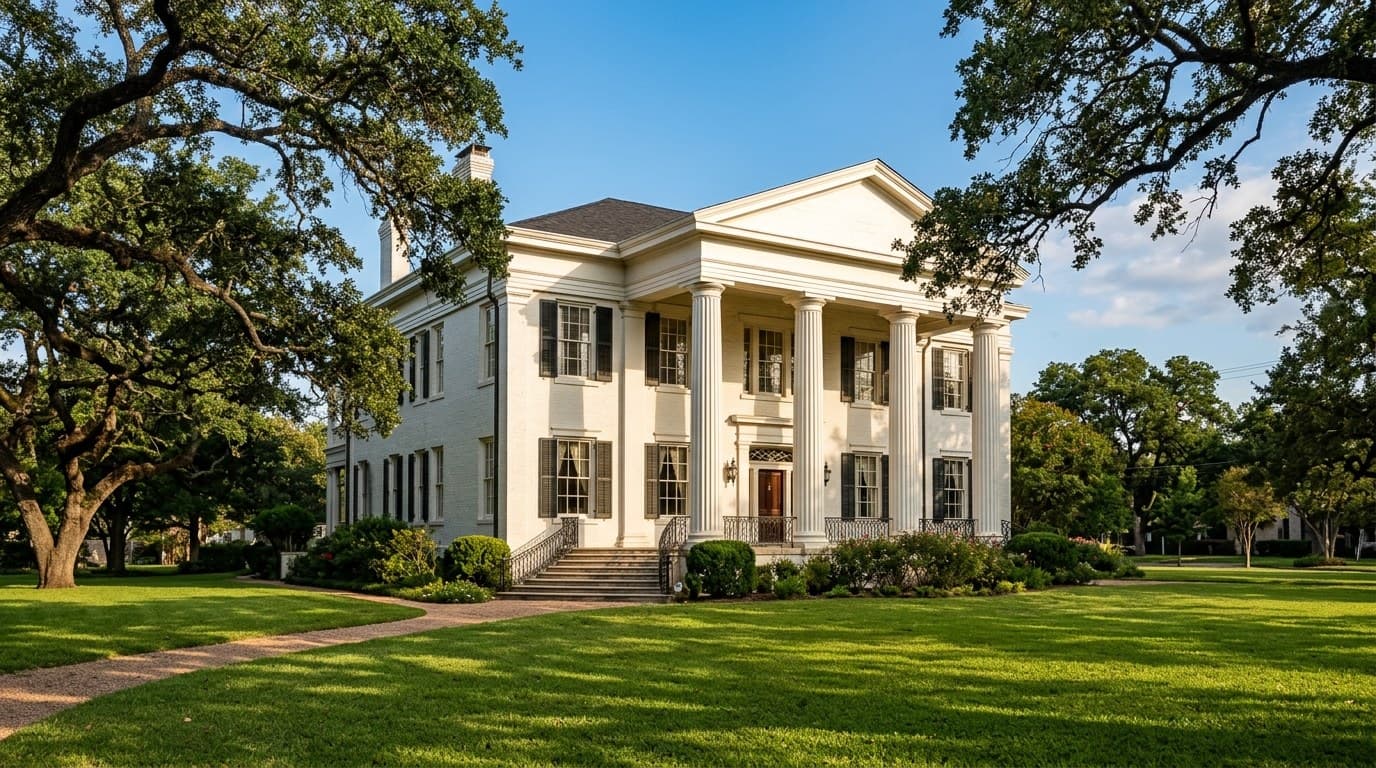
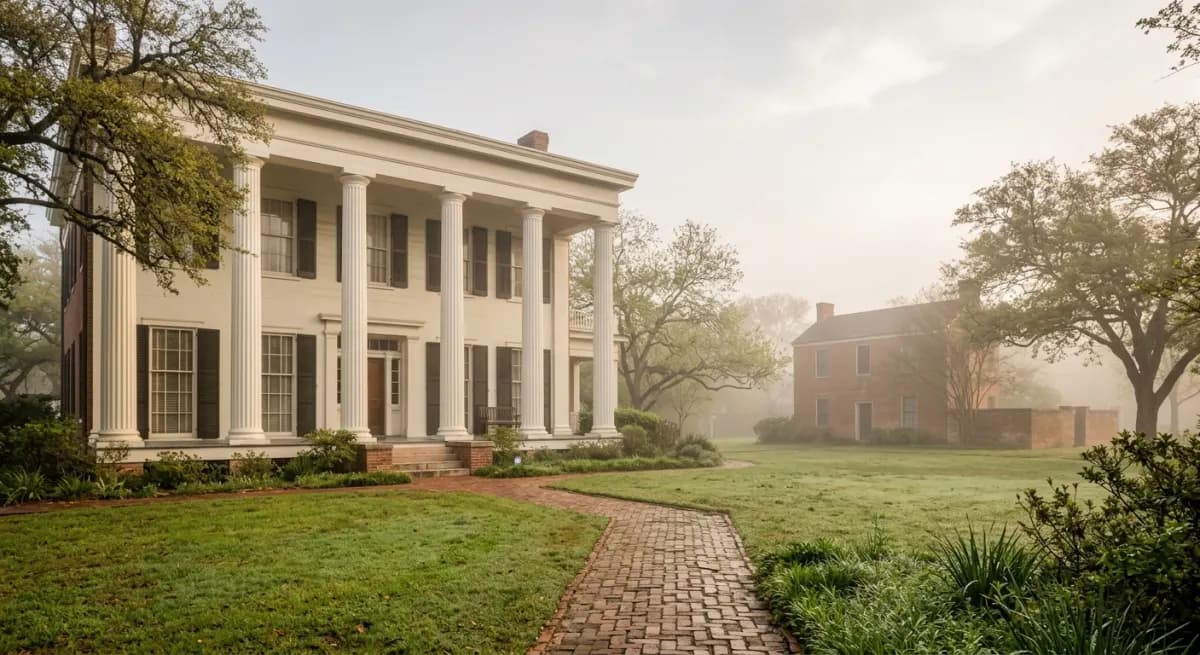
Built in 1856 and designed in the Greek Revival style by Abner Cook, the house predates the University of Texas and much of the city grid that surrounds it today (see the museum’s official history: https://www.nchmuseum.org/about-us). While Austin officially became the capital of the Republic of Texas in 1839, few physical structures from that era remain accessible to the public.
This one does.
Unlike many preserved homes that focus solely on furniture and architecture, the Neill‑Cochran House Museum explicitly centers interpretation of the first century of Austin’s history (1839–1930) — including the people whose stories were historically marginalized, as outlined in its exhibitions and tours (https://www.nchmuseum.org/exhibits).
That includes enslaved individuals who lived and worked on the property. The preserved slave quarters behind the main house are the only intact example open to the public in Austin, giving the museum a responsibility few institutions in the city carry.
If you recently toured the Texas State Capitol, visit here next. The Capitol shows political power — this house reveals the domestic and labor systems that supported it.
The Slave Quarters: The Most Important Room in Austin You’re Probably Not Visiting
Most first‑time visitors are surprised by how understated the slave quarters structure appears.
It’s small. Brick. Detached from the main home.
And that’s precisely the point.
This space reframes Austin’s origin story. Instead of presenting the 1850s purely as a romantic Southern architectural era, the museum contextualizes wealth, labor, and the realities of enslavement in early Texas through dedicated interpretation and guided tours (https://www.nchmuseum.org/exhibits).
Insider insight: Ask staff how interpretation of the quarters has evolved over the last decade. The museum has increasingly shifted from passive acknowledgment to active storytelling — incorporating deeper archival research and broader discussions of race, labor, and power in early Austin.
Plan extra time here. This isn’t a quick walk‑through — it’s the emotional anchor of the property.
A House That Has Worn Many Identities
Another detail casual visitors miss: this wasn’t just a private residence.
Over its lifetime, the building has served as:
- A family home
- A boarding house
- A school
Its broader historical significance — including its reputation as one of Austin’s most important surviving historic homes — is also noted by the Austin Museums Partnership (https://www.austinmuseums.org/neillcochran-house-museum).
Each layer added new social dynamics to the structure. That evolution allows curators to interpret shifting class systems, education access, and neighborhood transformation across nearly a century.
Ask which rooms reflect which era. Not every space represents 1856 — some interpret later boarding house and school periods.
Rotating Exhibitions: Why This Isn’t a “Static” House Museum
Many historic homes feel frozen in time.
Neill‑Cochran doesn’t.
In addition to historically furnished rooms, the museum hosts rotating exhibitions and public programs that reinterpret American history through contemporary lenses (current listings: https://www.nchmuseum.org/exhibits).
Recent and upcoming programming — from photography workshops to history talks — can be found on the museum’s official events calendar (https://www.nchmuseum.org/events).
Check the events calendar before you go. Lectures and special programs often provide deeper context than a self‑guided visit alone.
If you enjoy blending history with active cultural programming — similar to what we saw at the Blanton’s immersive AI exhibition — this museum offers a smaller, more intimate version of that evolving dialogue.
Architecture Details You Shouldn’t Miss
Even if you come primarily for the historical narrative, pause to study the architecture:
- Symmetrical Greek Revival façade
- Tall columns and balanced proportions
- Period‑appropriate interior detailing
- Detached service structure (the quarters)
The museum’s online collections — spanning decorative arts, textiles, and furnishings from roughly 1780–1925 — offer additional context for what you’ll see inside (https://www.nchmuseum.org/collections).
Unlike the grandeur of the Driskill, this home reflects upper‑middle‑class domestic life rather than hotel opulence.
It’s quieter — and arguably more revealing.
Practical Visitor Intelligence (What Locals Know)
Location:
Hours (as of March 2026):
(Confirm before visiting: https://www.nchmuseum.org/visit)
Admission, tours & updates:
https://www.nchmuseum.org
Street parking in West Campus can be tight during UT class hours. If you’re pairing this with a campus visit, consider parking once and walking.
Time needed: 60–90 minutes for a meaningful visit. Don’t rush the quarters.
Overall Experience
- Only intact slave quarters open to the public in Austin
- Deep interpretation of early city history
- Walkable from UT
- Rotating exhibitions
- Limited hours
- Small footprint
- Minimal on-site parking
One of the most important historical sites in Austin — not because it’s grand, but because it’s honest. If you want a layered, unromanticized look at the city’s 19th‑century roots, this is essential.
Why This Story Is Bigger Than a House
Austin’s rapid growth often overshadows its early complexity. Luxury high‑rises and tech campuses dominate headlines. But the Neill‑Cochran House Museum preserves something more fragile: context.
It forces a fuller telling of Austin’s 19th‑century story — one that includes architecture, education, class systems, and enslaved labor.
And in 2026, as conversations around historical memory continue evolving nationwide, this small Greek Revival home near UT might be one of the most important rooms in the city.
If you want Austin’s origin story — not the myth, but the layered reality — start here.
Then look at the skyline differently on your way home.
Related Austin Data
More Austin Guides
Share this article