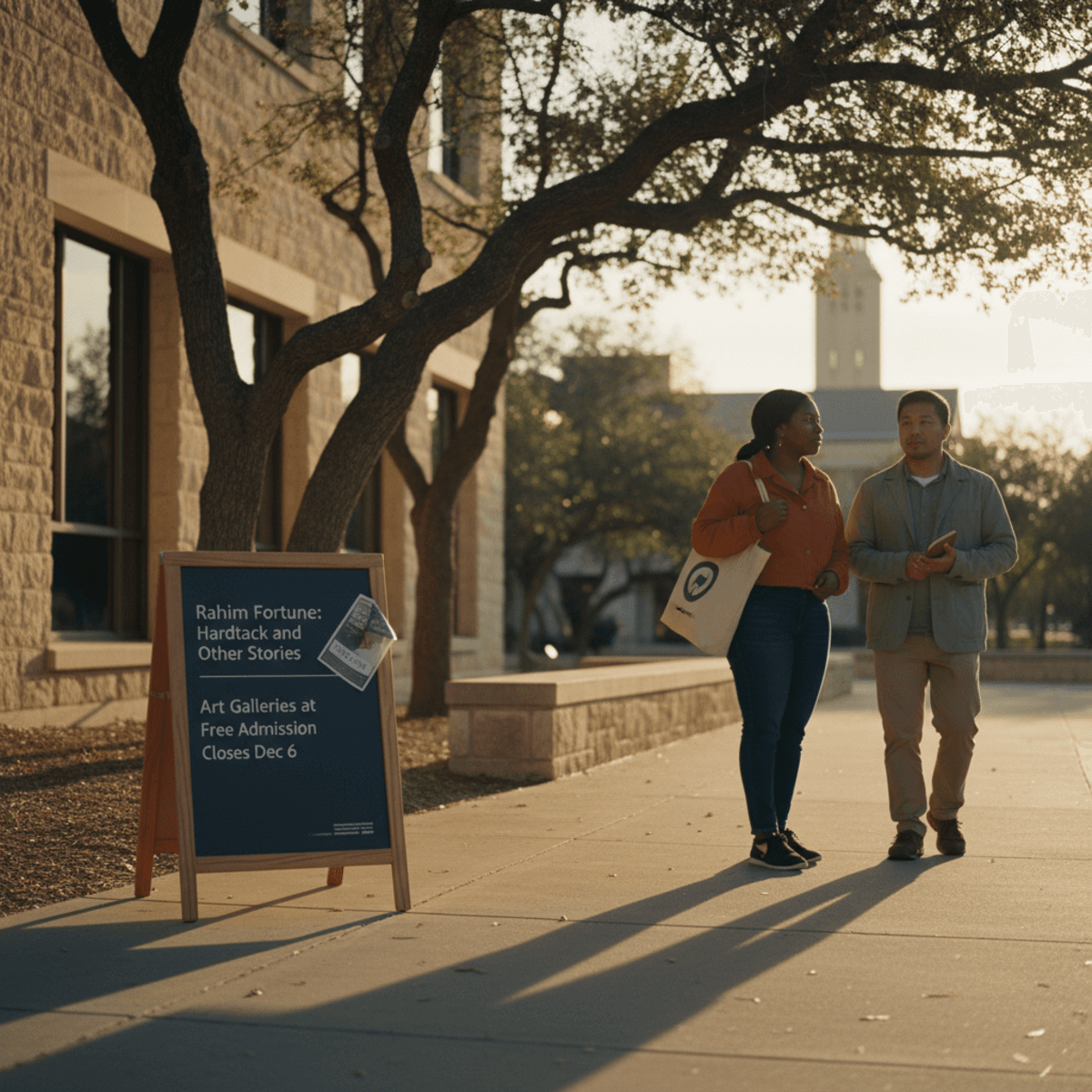
If you've been waiting to see Rahim Fortune's "Hardtack" and Other Stories at the Art Galleries at Black Studies (AGBS), UT Austin, this is your last call. The exhibition runs through December 6, 2025—only 10 days remain. With today's weather at a crisp 64°F and sunny, it's ideal gallery-going. Admission is free.

Pro Tip

Block 90 minutes and plan to see both "Hardtack" and the adjacent "World"-traveling show in one visit—you’ll avoid re-parking and give the curatorial dialogue room to land.

Why "Hardtack" matters now
Fortune's photographs extend the line from Dawoud Bey and Roy DeCarava's intimate portraiture to Dorothea Lange's landscape testimony—centered on Black and Indigenous communities in the U.S. South. The work holds love and loss in the same frame and tracks migration and place-making with the patience of lived memory, echoing themes explored in Southern studies and diaspora scholarship. It reads as both eulogy and elegy for an American South shaped by survival and kinship.

Essential visitor info (quick)

Loading map...

Art Galleries at Black Studies (AGBS)

Free
  • Venue: Art Galleries at Black Studies, Beauford H. Jester Center, Room A232 (2nd Floor), 201 East 21st Street, Austin, TX 78712
  • Hours: Wed–Fri 12:00–5:00 PM; Sat 11:00 AM–2:00 PM
  • Admission: Free
  • Parking: Brazos Parking Garage, 210 E MLK Blvd; metered street parking on E Dean Keeton St (5–8 min walk)
  • Dates: Through Saturday, Dec 6, 2025

Insider timing strategies

  • Quietest windows: Wed–Fri 12:00–1:30 PM and the last hour before close. Saturdays 11:00–12:00 typically see gentler foot traffic.
  • Pair the shows smartly: Start with "Hardtack" when you're freshest (45–60 minutes), then cross into the adjacent "World"-traveling: Black Studies Research in Relation (20–30 minutes). Take a hydration or coffee pause between the two to reset your eye.
  • Lighting matters: Fortune's prints reward slow looking under the gallery's soft, even light. Stand back to see structure, then step in close to read micro-gestures and tonal detail—especially in the deep blacks.
Pro Tip

Arrive right at opening on Wednesday or Thursday if you want the space mostly to yourself; combine that with a second lap through your favorite wall at the end for the deepest read of the work.

What to look for in Fortune's key images (a viewing checklist)

  • Light as narrative: Watch how available light cuts across faces and land—echoes of DeCarava's deep tonal range. Let your eyes adjust to the shadow; details emerge slowly.
  • Portrait stance: Note the negotiated space between photographer and sitter—Bey-like reciprocity. Read posture, hand placement, and the way eyes carry history without spectacle.
  • Landscapes as testimony: Lange's legacy shows in Fortune's attention to edges—road shoulders, utility poles, waterlines, signage. Look beyond the horizon; what's happening in the margins?
  • Material traces: Scan for objects that carry memory—plastic lawn chairs, chain-link, porch railings, church fans, roadside altars. These are anchor points for migration and place-making.
  • Movement and return: Look for paths—roads, creeks, rail lines. Where do they lead? What does coming back look like versus moving on?
  • Love and grief in the same frame: Fortune's quiet, intimate scenes often hold both. Ask: What's being protected? What's being mourned?
  • Sequencing on the wall: Read pairs and clusters like chapters. If two images face each other, consider what conversation the gallery intends—gesture to gesture, place to place, present to past.

How to navigate both exhibitions efficiently

  • Start: Check in at the desk, skim the wall text to lock in themes (loss/love, migration, place-making).
  • Route: Move left to right through "Hardtack," pausing at any grouping. Spend 90 seconds with each anchor image; then return to 2–3 photographs that pull you strongest and spend 3–5 minutes each.
  • Transition: Take a short break, then enter "World"-traveling. Read one research text fully, then look at the paired artwork, and repeat. Two cycles will surface the curatorial logic (landscape/place/ancestry/diaspora/belonging).
  • Exit: Re-walk your favorite cluster in "Hardtack" for a final pass. Slow looking on the second lap often reveals the photograph Fortune made for you to find.

Expert tips for a better gallery experience

  • Bring a small notebook or phone notes app. Jot image positions (second wall, far right) to remember your favorites without needing titles.
  • Ask the attendant about programming, print availability, or catalogues; AGBS staff are generous with context.
  • Mind the pace: Two beats per image—one at six feet, one at 18 inches—keeps your seeing alive.
  • Photography policy varies—always ask before shooting. If allowed, no flash; take one photo, then put the phone away and look.
  • Parking buffer: Add 10–15 minutes for campus wayfinding from Brazos Garage or Dean Keeton meters, or use the UT Austin campus map for step-by-step walking directions.
  • Saturday add-on: With great weather, plan a campus stroll post-visit. If you're making a day of it, see our weekend picks.
Heads Up

UT campus parking can back up around event times and during peak class hours. Build in a 10–15 minute buffer from garage or street parking to the gallery so you don’t lose viewing time.

Cultural context and significance (read this before you go)

  • Lineage: Fortune is building from Bey's collaborative portraiture, DeCarava's tonal poetics of Black life, and Lange's insistence that landscapes can witness history. He's translating that lineage to a 21st-century South where migration patterns, climate pressure, and cultural memory entangle. You can see this trajectory alongside other contemporary voices via The Photographers' Gallery’s profile on Rahim Fortune.
  • Eulogy and elegy: The work holds space for grieving what's gone while honoring what endures—family, place-making, ways of gathering. That dual charge is the emotional engine of the show.
  • South, plural: You'll see multiple Souths at once—rural and urban, river and highway, ceremony and everydayness—without easy binaries. Read for complexity, not conclusions.

Insider intelligence (for collectors, educators, creators)

  • Collectors: Ask about edition sizes, print processes, and whether works are part of a larger series or book project. Note images with strong diptych potential—they often anchor a collection hang. Fortune’s broader practice and book projects are outlined on the artist’s official site.
  • Educators: Pair "Hardtack" with a seminar on visual ethnography or American Studies. The adjacent "World"-traveling show adds interdisciplinary writing—perfect for assignments that blend image and text, especially alongside visual ethnography resources in American Studies.
  • Creators/brands: If you're building content on contemporary Southern culture or diaspora, this exhibition provides a credible visual lexicon. Secure permission before filming; plan b-roll in the courtyard, not just the gallery.

Plan your visit (with insider angles)

  • Best day: Wednesday or Thursday early afternoon for the most contemplative space.
  • Time-on-site: 75–90 minutes for both shows without rushing.
  • Nearby bites and add-ons:
    • Pre- or post-visit barbecue hit list (article_url:austin-bbq-nov-2025-001)
    • Sushi omakase if you're making it a night out (article_url:shokunin-austin-insider-nov-2025)
    • Healthy grab-and-go near campus (article_url:everbowl-austin-opening-nov-2025)
    • November dining heat map for more options (article_url:austin-food-drink-nov-2025-insider)

Practical reminders

Wed–Fri 12–5 PM; Sat 11 AM–2 PM
  • Address: 201 East 21st Street, Austin, TX 78712 (Beauford H. Jester Center, Room A232, 2nd Floor)
  • Hours: Wed–Fri 12–5 PM; Sat 11 AM–2 PM
  • Parking: Brazos Parking Garage at 210 E MLK Blvd; metered street parking on E Dean Keeton (5–8 minute walk)
  • Weather today: 64°F, sunny, 0% precipitation—perfect for a campus stroll before or after your visit; for up-to-the-minute conditions, check the National Weather Service Austin forecast.
  • Countdown: Exhibition closes December 6, 2025
Note

Details like hours and parking are current as of publication but can shift with campus schedules and holidays. Always confirm via the official Art Galleries at Black Studies or UT Parking sites before you go.

Primary sources

Make it happen
Block 90 minutes, park once, see both shows, and give yourself permission to look slowly. Fortune's "Hardtack" isn't just about the South—it's about how we carry places with us, and how pictures can hold what words sometimes can't. If you want to extend the day with more Austin-only experiences afterward, consider winding down at a classic East Austin arts hangout like The Butterfly Bar at The Vortex or closing the night at The Broken Spoke, the city's last true Texas dance hall.